
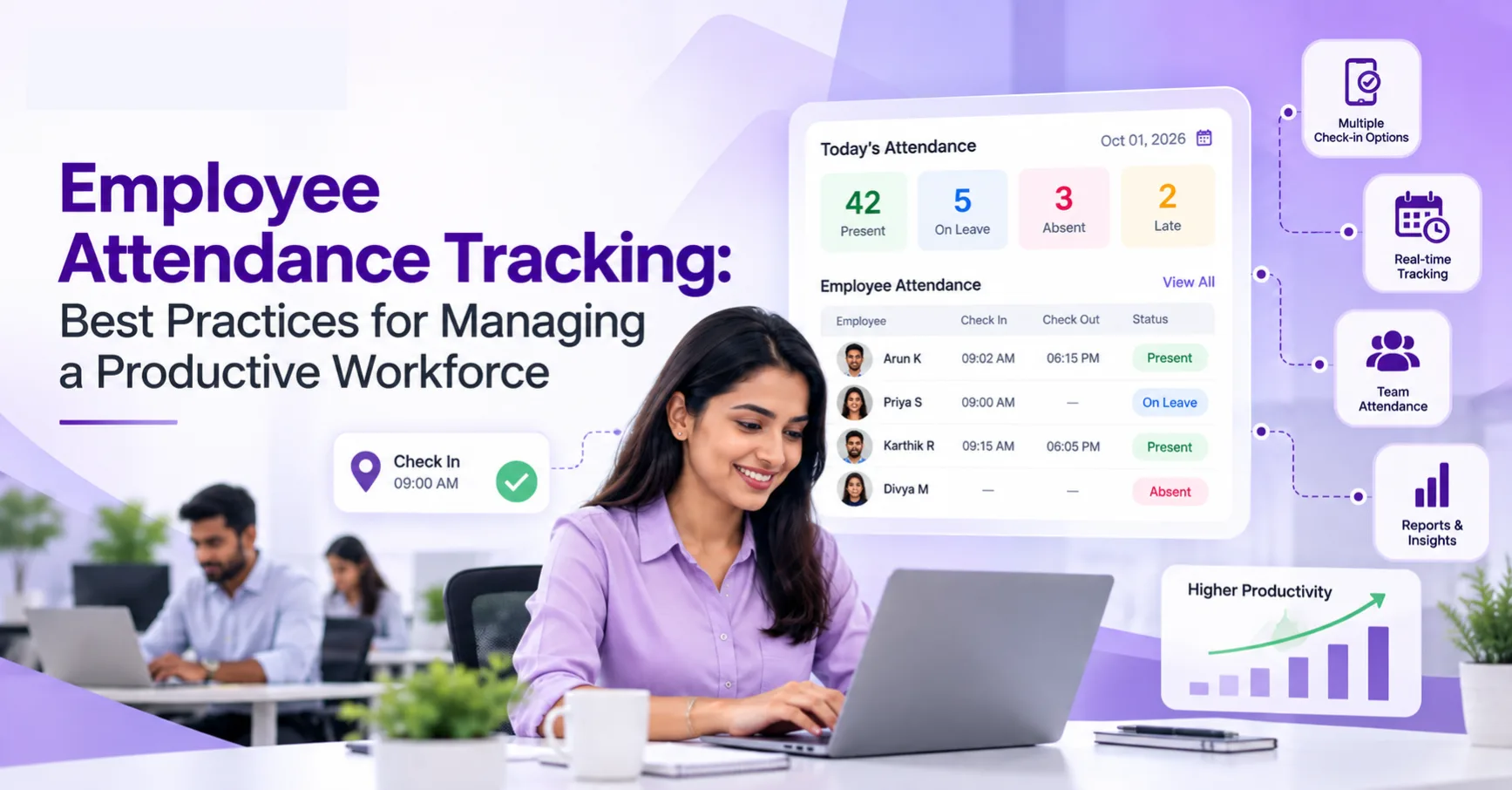
Employee Attendance Tracking: Best Practices for Managing a Productive Workforce
Employee attendance tracking is an important part of everyday workforce management. Businesses need reliable attendance records to understand employee availability, working schedules, shifts, and leave.
As teams become larger or more distributed, managing attendance through manual processes can become difficult. A structured attendance tracking system can help businesses maintain consistent records and make attendance information easier to review.
What Is Employee Attendance Tracking?
Employee attendance tracking is the process of recording and monitoring when employees attend work. It can include check-in times, check-out times, working hours, shifts, leave, and attendance corrections.
The goal is to maintain an accurate and accessible record of employee attendance.
Common Attendance Tracking Methods
Businesses use different methods to track employee attendance depending on their workforce and workplace structure.
- Manual attendance registers
- Spreadsheets
- Biometric attendance systems
- Web-based attendance systems
- Mobile attendance applications
- Location-based attendance systems
The right approach depends on factors such as team size, work locations, shifts, and employee working patterns.
Best Practices for Employee Attendance Tracking
Use a Consistent Attendance Process
Employees should have a clear and consistent process for recording attendance. A standardized process makes attendance records easier to maintain and review.
Keep Attendance Records Centralized
Maintaining attendance information in one system can reduce the need to manage multiple spreadsheets or separate records.
Connect Attendance With Leave
Attendance and leave are closely related workforce records. Connecting them can help managers understand employee availability more clearly.
Manage Shifts Clearly
Businesses with shift-based employees should maintain clear shift schedules and connect them with attendance records where supported.
Review Attendance Regularly
Regular attendance reviews can help managers identify missing records, attendance corrections, or scheduling issues that need attention.
Attendance Tracking for Different Types of Employees
Office Employees
Office teams can use digital attendance systems to record attendance and working hours through supported workplace methods.
Field Employees
Field employees may require mobile or location-based attendance options because they may not work from a fixed office.
Shift Employees
Employees working different shifts can benefit from attendance systems that connect scheduled shifts with attendance records.
Multi-Location Teams
Businesses with multiple branches or work locations can use centralized attendance systems to maintain records across different locations.
How Attendance Software Supports Managers
An attendance management system can give managers a centralized view of employee attendance. Instead of collecting information from different sources, managers can review attendance records through a single platform.
This can make everyday attendance administration more organized and reduce manual record management.
Conclusion
Effective employee attendance tracking starts with a clear process and reliable records. Businesses can improve attendance management by using consistent attendance methods, centralized records, clear shift schedules, and connected leave management.
As the workforce grows, attendance tracking software can help businesses manage these processes in a more structured way.